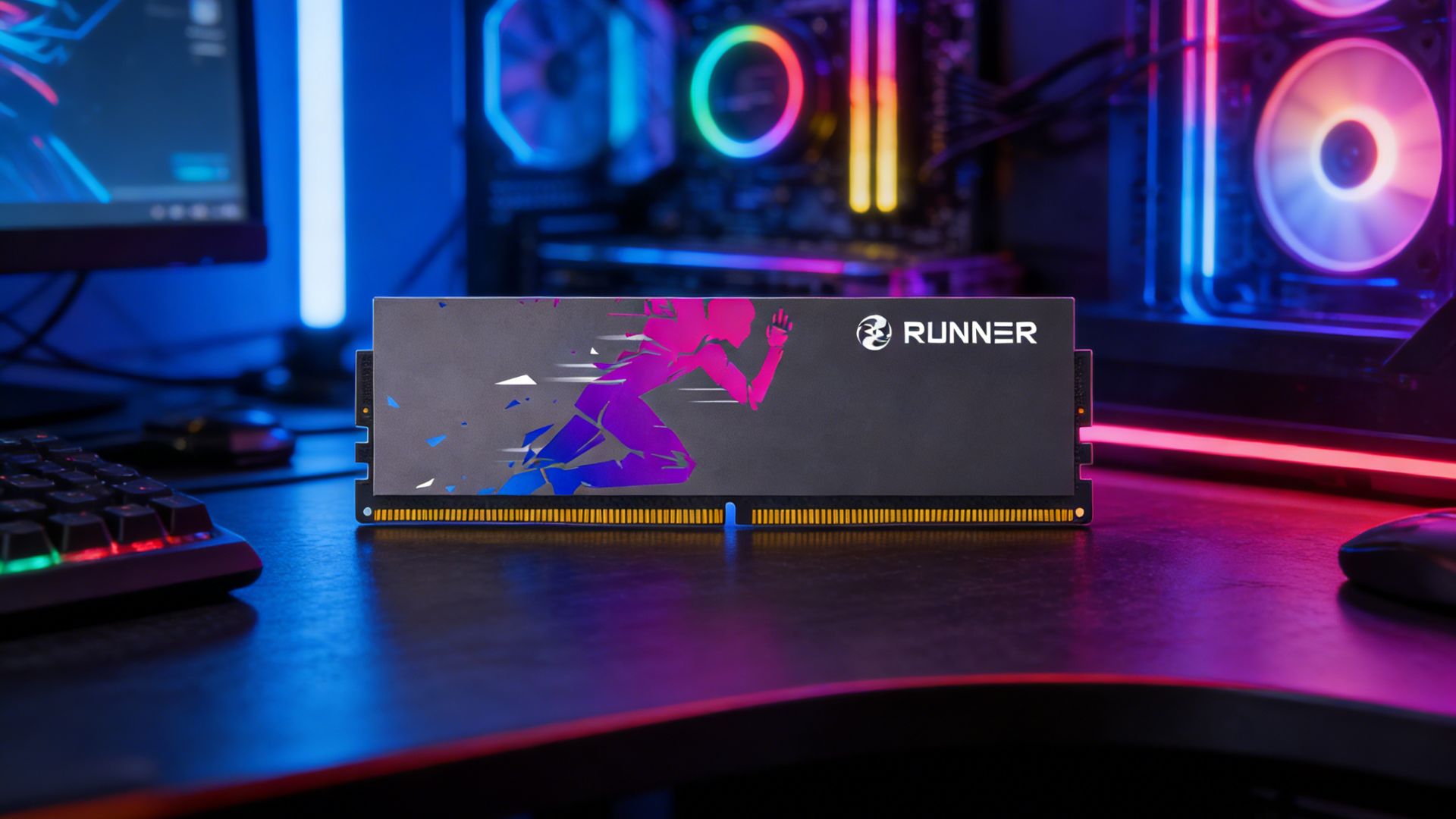
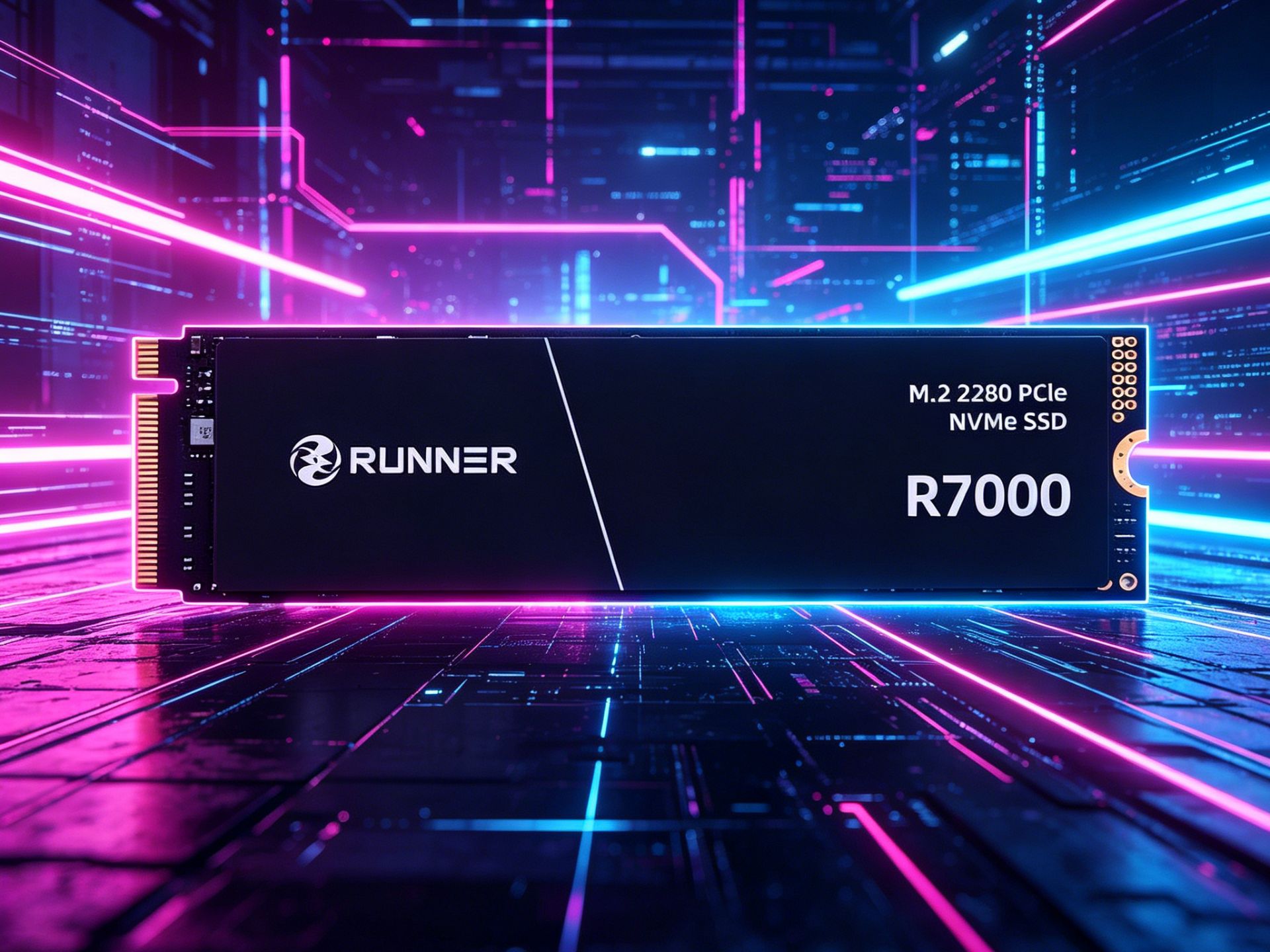
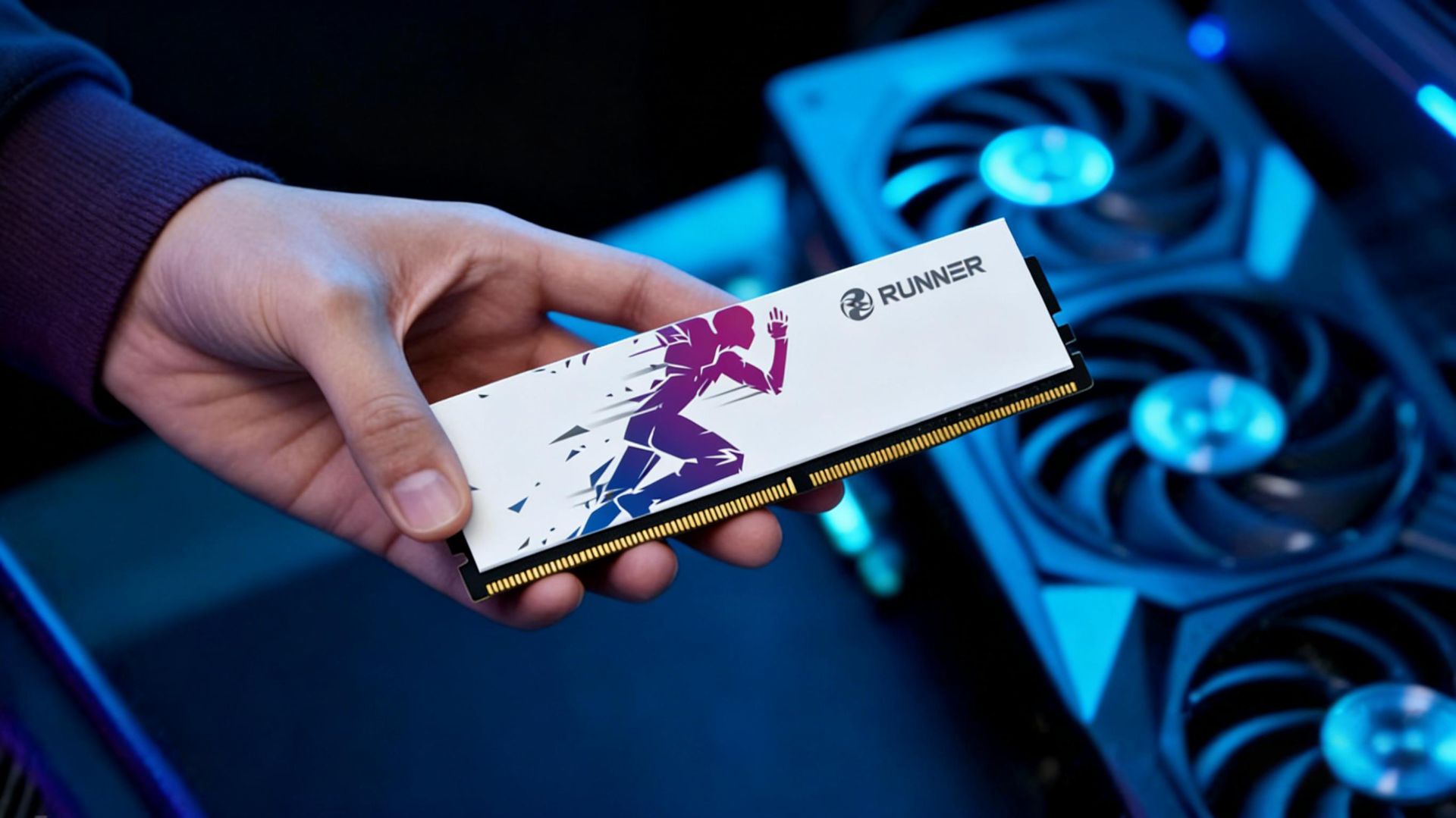
"The market is never short of memory brands, but it consistently lacks a deep response to users' real needs."
This was the opening statement from the RUNNER Product Manager when faced with the question of why they chose to enter the memory market at this particular time.
In his view, the current memory market is in a contradictory phase where "specification frenzy" and "disconnected user experience" coexist. High-frequency numbers keep breaking records, and overclocking capabilities have become a marketing focus. However, the fundamental issues faced by average users—blue screens, crashes, compatibility problems, and performance instability—have not been genuinely resolved.
01
Market Observation: The Blue Gap in a Red Ocean
The RUNNER Product Manager presented a market analysis chart clearly detailing the change curves in the memory market over the past three years.
"On the surface, this is a fully competitive red ocean market. But judging from user feedback and after-sales data, there is a noticeable experience gap," he stated, pointing to several key points on the chart.
The high-end market overly focuses on extreme overclocking. Products are designed to break benchmark records but neglect the basic need for daily stability among the majority of users. The mainstream market offers products with seemingly attractive specifications, but stability and compatibility in real-world usage are often compromised.
"We noticed an interesting phenomenon: many users, after purchasing high-frequency memory, ultimately choose to underclock it due to encountering compatibility issues or system instability," the RUNNER Product Manager shared an insight from e-commerce reviews. "This means they paid a premium for high frequency but didn't enjoy the corresponding experience."
This observation directly shaped RUNNER's product philosophy: not just competing for benchmark scores, but safeguarding the user experience.
02
User Pain Points: The Overlooked 'Stability Essential'
In recent months of market research, the RUNNER team collected over a thousand valid questionnaires and interviewed hundreds of memory users at different levels.
"Gamers fear lag during team fights the most, content creators cannot afford project file crashes, and average users are troubled by random blue screens," the RUNNER Product Manager shared research findings. "Behind these problems often lies an unstable memory subsystem."
Surprisingly, despite stability being so crucial, few brands in the market systematically address and communicate it as a core selling point.
"Current market communication overly focuses on 'how high a frequency we can achieve' rather than 'how stable we can remain at that frequency'," the RUNNER Product Manager believes this is typical feature competition, not experience competition.
RUNNER decided to go against the grain. "Our products might not have the highest frequency, but they must be the most stable at their rated frequency," the RUNNER Product Manager stated firmly. "This is a seemingly simple yet actually difficult promise. It requires full-chain control from chip selection, circuit design, cooling solutions, to compatibility testing."
03
Supply Chain Preparation: Confidence Built on Two Decades of Experience
The decision to enter the market at this time is based not only on market insight but also on solid supply chain capabilities.
"RUNNER's parent company has over twenty years of experience in the storage industry," the RUNNER Product Manager acknowledged. "This enables us to access high-quality chip supply chains, establish strict quality control systems, and, more importantly—accumulate a deep understanding of storage product reliability."
In the memory industry, the stability and quality control capability of the supply chain often determine a product's baseline performance. The biggest challenge for a new brand is not designing attractive products but being able to consistently supply products with uniform performance and reliable quality.
"We spent over half a year building and磨合 (integrating) our supply chain system," the RUNNER Product Manager revealed. "From chip selection standards to production testing processes, we set higher requirements than industry standards for each环节 (step). Especially for compatibility testing, we established a test matrix covering mainstream motherboard and CPU combinations to ensure product stability in real usage environments."
This deep control over the supply chain forms the technical底气 (confidence) behind RUNNER's bold promise of stability.
04
Brand Philosophy: Being a 'Reliable Data Partner'
During the interview, the RUNNER Product Manager repeatedly emphasized a concept: RUNNER hopes to become users' "reliable data partner," not just a hardware supplier.
"Memory is the temporary home for data and the foundation of the system's working state," he analogized. "Unreliable memory is like a house with an unstable foundation; no matter how华丽 (magnificent) the decoration, it risks collapsing at any moment."
This philosophy runs through RUNNER's entire product development process. From initial product definition, mid-stage design verification, to final mass production testing, stability has always been the top priority.
"We have an internal motto: let users forget the memory exists," the RUNNER Product Manager explained this seemingly contradictory goal. "The best memory shouldn't be a component users constantly worry about and tweak. It should be the silently stable cornerstone of the system."
This "invisible yet critical" product philosophy interestingly echoes the RUNNER brand name—the value of a runner lies not in constant attention but in reliably delivering information to its destination.
05
Future Plans: More Than Just a Memory Brand
Although entering the market with memory products, RUNNER's vision is not limited to this.
"Storage is a systematic issue," the RUNNER Product Manager looked ahead. "Memory, SSDs, and mobile storage devices together form a complete data ecosystem. The technical understanding and quality standards we accumulate in the memory field will expand to broader storage and even other digital areas in the future."
In the short term, RUNNER will focus on building reputation and awareness for its memory products. "We believe that by solving the core pain point of stability, we can find our place in the fiercely competitive market."
In the long run, RUNNER hopes to redefine the value standards for storage products. "While the industry pursues higher and faster, we want to remind the market that being more stable is equally important," the RUNNER Product Manager concluded. "This is not just a product strategy but also an attitude of responsibility towards users."
"The market always welcomes new entrants, provided they bring real value," the RUNNER Product Manager said. "We don't think the timing for entering the market is early or late. We believe the right time to enter is always the point when you solve real problems for users."