RUNNER has recently launched four new solid-state drive models: R7000, R7000L, R3000 and R500. They are positioned respectively as flagship performance, high cost-performance, mainstream Gen3 and classic SATA drives. Many users may feel confused by the listed read/write speeds, TBW and MTBF parameters.
Today we will clearly illustrate the differences and applicable scenarios of these four SSDs in plain language.
01 Product Overview
Here is a quick look at the core positioning of each model:
- R7000: PCIe 4.0 x4 flagship SSD with TLC flash. Sequential read/write speeds up to 7200/6300MB/s, ideal for gaming, content creation and system installation.
- R7000L: PCIe 4.0 x4 sub-flagship SSD with QLC flash. Sequential read/write speeds reach 6300/6100MB/s. More affordable than R7000, perfect for mass storage.
- R3000: Mainstream PCIe 3.0 x4 SSD equipped with TLC flash, delivering 3200/2500MB/s read and write speeds. Great for old platform upgrades and budget users.
- R500: Classic SATA 3.0 SSD with around 520/500MB/s transfer speeds. Universally compatible with desktops and laptops, excellent for boosting old devices.
Below is the detailed introduction to each model and its target users.
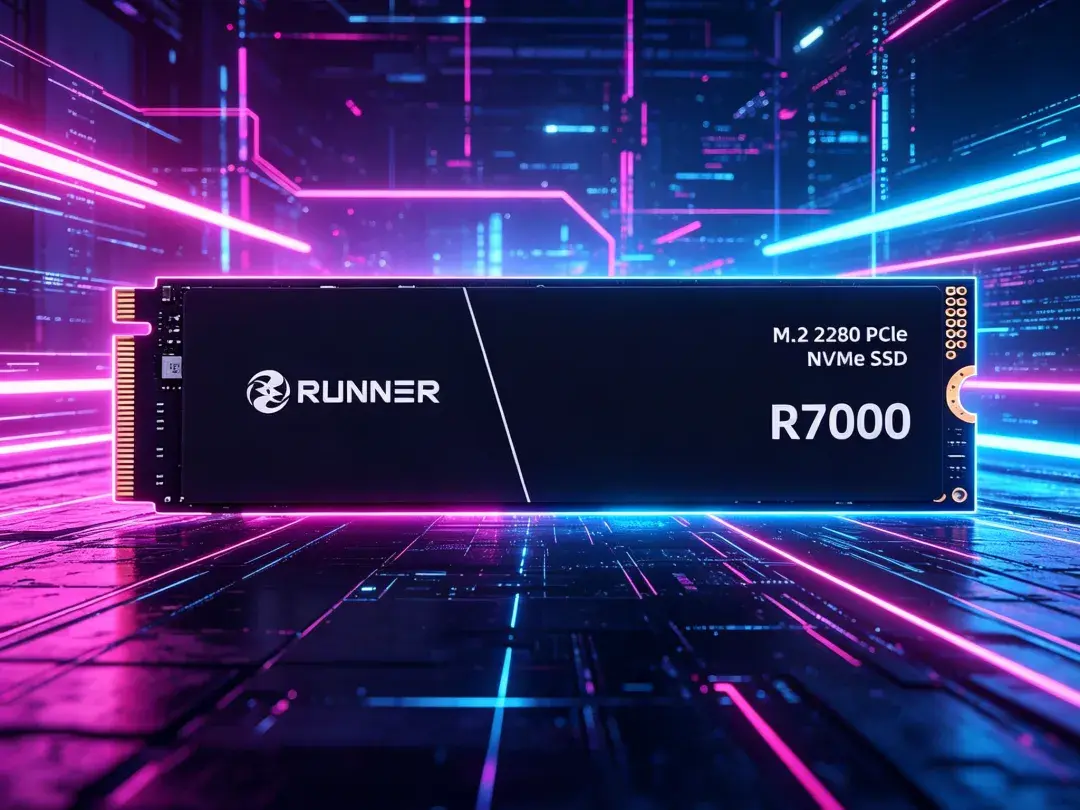
02 R7000: PCIe 4.0 Flagship, Top Pick for Speed Enthusiasts
As RUNNER’s top-tier SSD, the R7000 adopts M.2 2280 form factor, PCIe 4.0 x4 interface and TLC NAND flash.
Speed Performance
- Sequential Read: Up to 7200MB/s for 1TB–4TB versions; 7000MB/s for 512GB version
- Sequential Write: 6300MB/s for 1TB–4TB versions; 4200MB/s for 512GB version
It hits top-tier speed limits of PCIe 4.0 interface. It delivers instant response in game loading, 4K media file processing, system boot-up and software launching.
Endurance (TBW)
- 512GB: 500TBW
- 1TB: 1000TBW
- 2TB: 2000TBW
- 4TB: 4000TBW
TBW refers to the total writable data volume throughout the drive’s lifespan. Its generous TBW rating fully satisfies long-term usage demands of content creators and hardcore gamers.
Suitable Users
- Users with PCIe 4.0-supported motherboards (11th-gen Intel & newer, AMD B550/X570 and above)
- Gamers pursuing extreme transfer speeds
- Professionals engaged in video editing, 3D rendering and other creative work
- Well-budgeted users seeking one-stop flagship-grade configuration
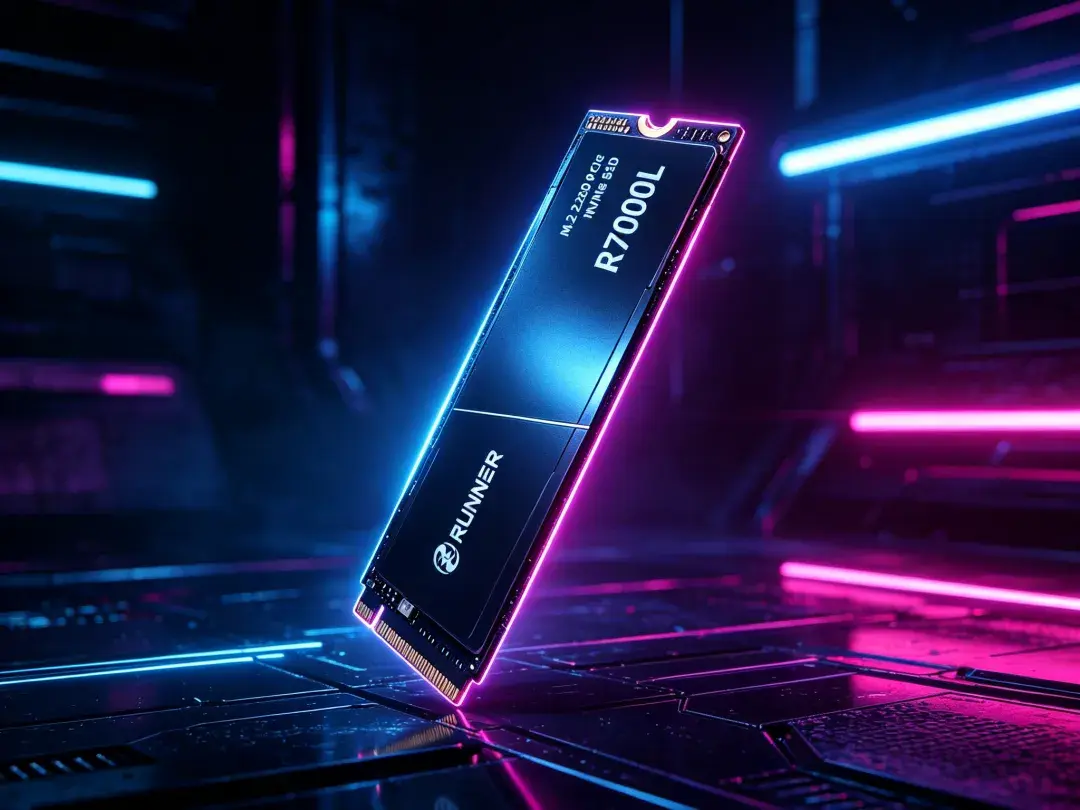
03 R7000L: Cost-Effective PCIe 4.0 Drive, Ideal for Mass Storage
Same M.2 2280 PCIe 4.0 x4 design as R7000, built with QLC flash memory.
Speed Performance
- Sequential Read: 6300–7100MB/s (7100MB/s for 1TB and larger capacities)
- Sequential Write: 3100MB/s for 512GB; 6100MB/s for 1TB and above
It retains outstanding read performance with slightly lower write speed, while the daily usage gap is barely noticeable.
Endurance (TBW)
- 512GB: 200TBW
- 1TB: 400TBW
- 2TB: 800TBW
- 4TB: 1600TBW
QLC flash features lower inherent erase-write cycles than TLC, yet its TBW rating is more than sufficient for most ordinary users. Taking 1TB 400TBW as an example, it can last over 10 years even with 100GB daily writing.
Suitable Users
- Users needing PCIe 4.0 high speed with limited budget
- Users mainly storing games, movies and media resources without heavy frequent writing tasks
- Those who want larger storage capacity at lower cost
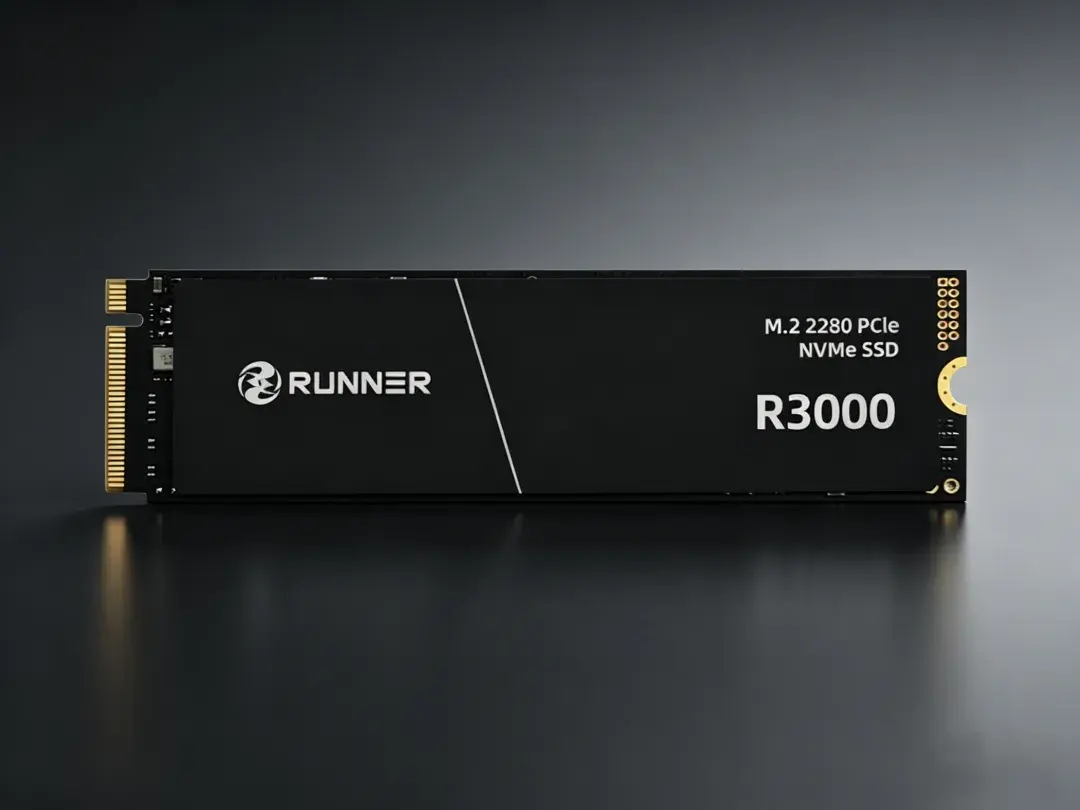
04 R3000: PCIe 3.0 Value King, Perfect for Legacy Platform Upgrades
Featuring PCIe 3.0 x4 interface and TLC flash, it serves as a balanced choice for mainstream assembly and old PC renovation.
Speed Performance
- Sequential Read: 3000MB/s for 256GB; 3200MB/s for 512GB and above
- Sequential Write: 900MB/s for 256GB; 1300MB/s for 512GB; 2000MB/s for 1TB; 2500MB/s for 2TB
Such speeds ensure smooth system booting, software launching and gaming experience. In actual use, the performance gap between PCIe 3.0 and PCIe 4.0 is far less obvious than the gap between HDD and SSD.
Endurance (TBW)
- 256GB: 150TBW
- 512GB: 300TBW
- 1TB: 600TBW
- 2TB: 1200TBW
Combined with reliable TLC flash and decent TBW, it ensures stable daily operation.
Suitable Users
- Devices equipped with PCIe 3.0-only motherboards (10th-gen Intel & older, AMD B450 and earlier chipsets)
- Budget-focused users preferring authentic TLC flash reliability
- Users with moderate performance demands for system or game disk usage
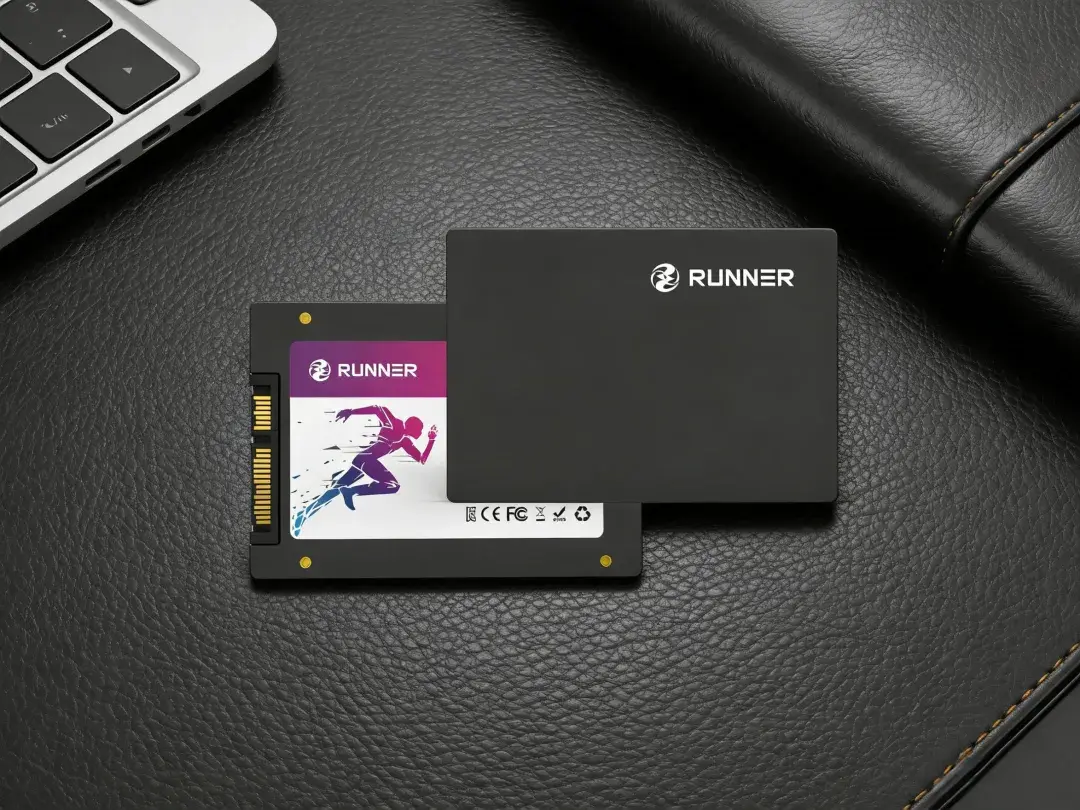
05 R500: Classic SATA 3.0 SSD, Revitalize Old Computers
This traditional 2.5-inch SATA SSD fits standard laptop 2.5-inch drive bays, running on SATA 3.0 protocol with maximum speed around 520MB/s.
Speed Performance
- Sequential Read: 500MB/s for 128GB; 520MB/s for 256GB and above
- Sequential Write: 450MB/s for 128GB; 470MB/s for 256GB; 480MB/s for 512GB; 500MB/s for 1TB
Though slower than NVMe SSDs, it delivers over 5 times faster speed than ordinary mechanical hard drives. It shortens system boot time from one minute to 10 seconds and enables instant software startup.
Endurance (TBW)
- 128GB: 80TBW
- 256GB: 150TBW
- 512GB: 300TBW
- 1TB: 600TBW
SATA SSDs generally come with lower TBW ratings, which has little impact on daily office work and entertainment due to low daily data writing volume.
Suitable Users
- Old PCs and laptops only equipped with SATA ports without M.2 slots
- Users upgrading legacy laptops and desktops by replacing HDDs
- Ideal for portable storage, download disks and light-duty data storage
- Budget users wanting smooth SSD experience
06 Horizontal Comparison & Buying Advice
- For performance-focused gamers and creators: Choose R7000. Adopting TLC flash, it supports up to 7200MB/s speed with high TBW and 5-year warranty for long-term reliable use.
- For budget-limited users wanting PCIe 4.0 speed: Go for R7000L. It offers fast read speed with slightly weaker write performance at a friendlier price, great for media and game storage.
- For PCIe 3.0 platforms or tight budgets: Pick R3000. Its 3200MB/s read speed meets daily needs perfectly, paired with TLC flash and high endurance, ranking as our best-selling model.
- For legacy device speed-up: Select R500. It enjoys ultra-wide compatibility and can revive almost all old computers easily.
- For NAS and download server building: Choose high-capacity affordable R500 or large-space QLC-based R7000L according to interface specifications.
07 Warranty & Reliability Notes
All four models feature an MTBF (Mean Time Between Failures) of 1.5 million hours, delivering dependable operational stability. Warranty Policy- R7000, R7000L, R3000: 5-year limited warranty or valid until reaching rated TBW, whichever comes first
- R500: 3-year limited warranty or valid until reaching rated TBW, whichever comes first