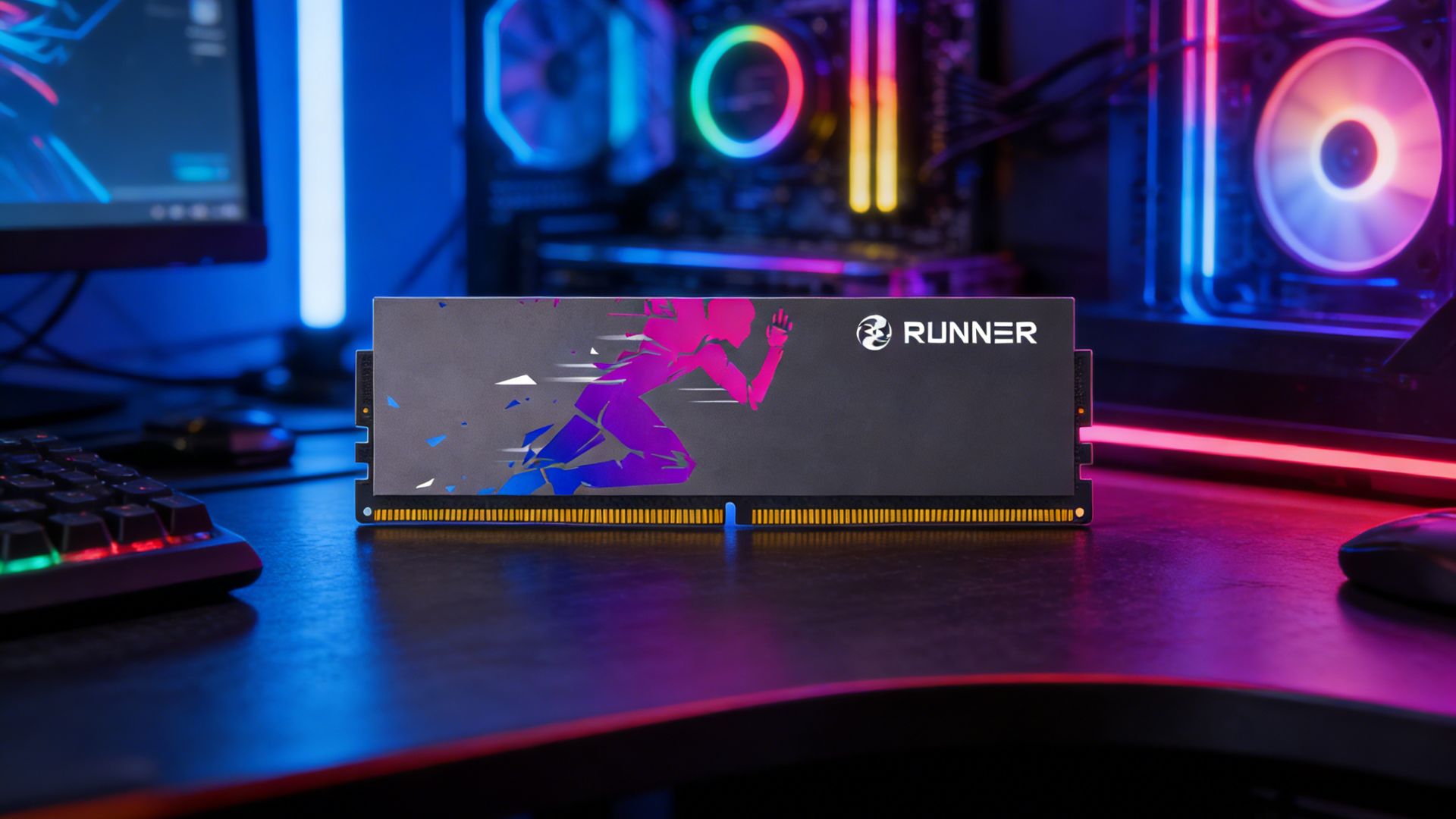
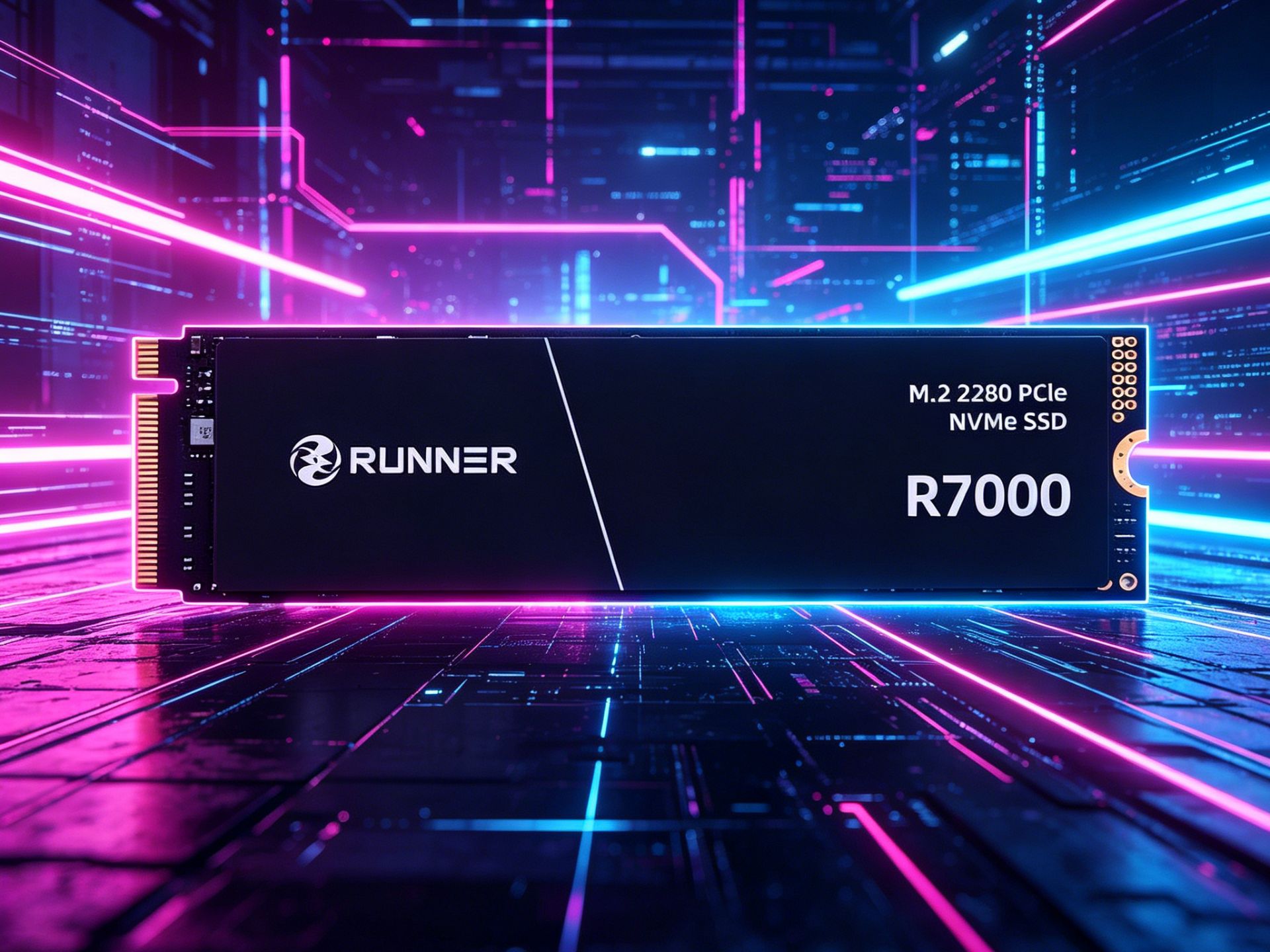
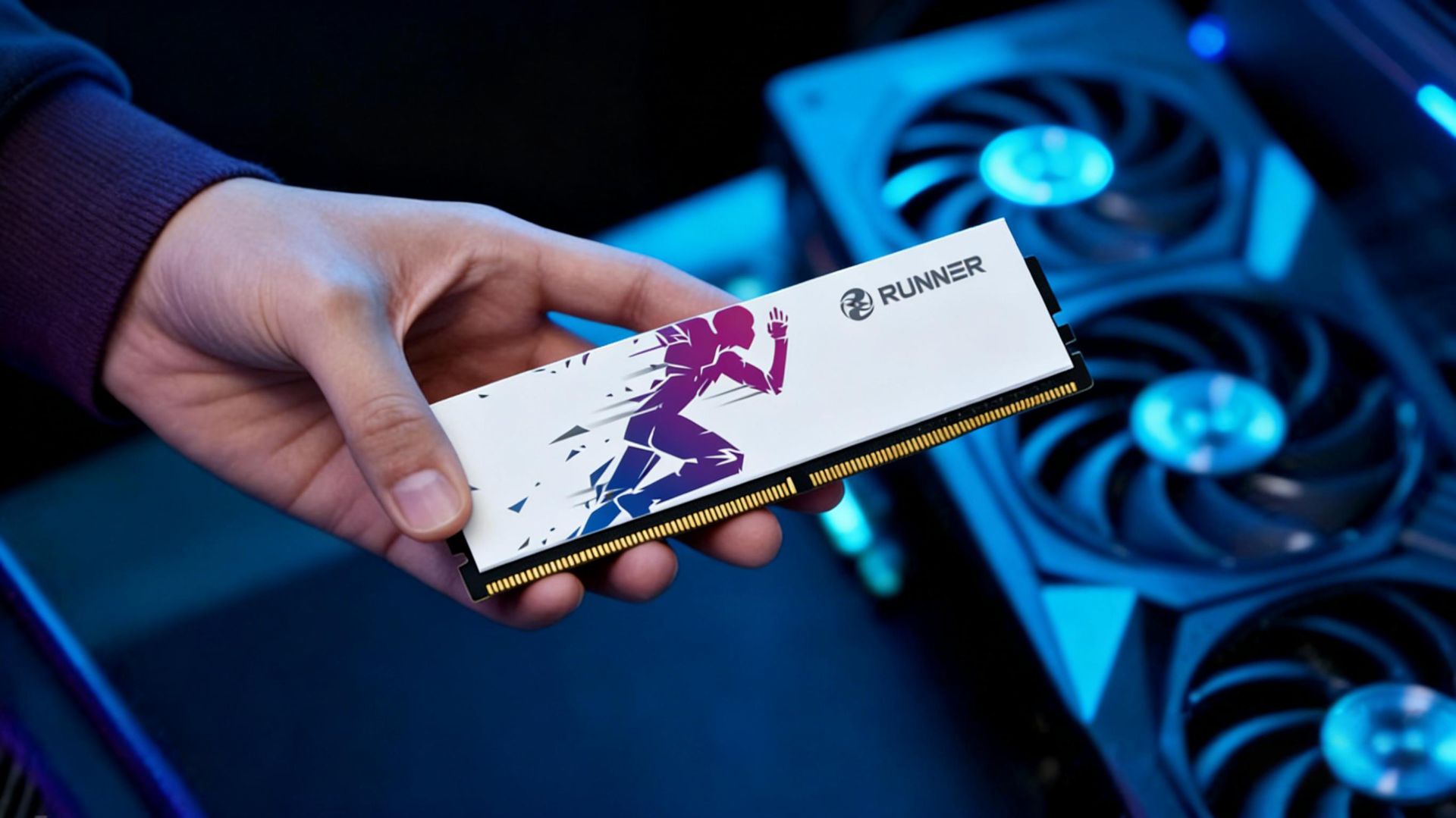
When a player executes a precise move in a game, or a designer seamlessly renders a complex model, a stable working memory module is working behind the scenes. Yet, few know the arduous journey a qualified memory module must undergo, from the production line to being assembled into a computer.
In RUNNER's product philosophy, memory should be more than just a list of specifications on a datasheet; it should be a stable and reliable cornerstone of the system. Therefore, every single RUNNER memory module must complete a full trial—from the laboratory to the user's desktop.

01
The Starting Screen: Selecting One in a Hundred - The Memory Chips
The memory's journey begins with its smallest unit—the memory chip. On RUNNER's production line, every batch of incoming chips first undergoes basic performance screening.
Test engineers load the chips onto specialized testing platforms to run fundamental read/write operations. The goal of this stage is to weed out individuals with obvious defects, filtering for chips that can function normally.
Chips that pass the initial screening then enter the grading test phase. At this stage, chips are operated under different voltages and temperature conditions to evaluate their performance and stability.
"We don't simply categorize chips as 'pass' or 'fail'," explained the head of the RUNNER laboratory. "Instead, we grade them precisely based on performance, ensuring all chips on the same memory module are highly consistent."
This consistency is crucial for memory stability. Combining chips with uneven performance can lead to difficult-to-coordinate timings, becoming a potential source of system instability. RUNNER's matching standards are stricter than常规的行业要求, ensuring harmony within each module.
02
Environmental Trials: Tempered by Ice and Fire
Assembled memory modules face even harsher environmental tests. Temperature cycling tests are a key part of this.
Inside the test chamber, the temperature cycles between -20°C and 85°C, simulating extreme environments from bitter winter to scorching summer. Each memory module must run continuously under these conditions, enduring thermal shock.
"Rapid temperature changes are a significant test for solder joints and materials," pointed out an environmental test engineer. "We use these extreme tests to expose potential material fatigue issues in advance."
This is followed by high-temperature and high-humidity tests. This primarily evaluates moisture resistance and long-term reliability, especially testing the protective capabilities of the gold finger plating and the PCB.
Vibration tests simulate physical shocks during transportation and use. The memory is secured on a vibration table and subjected to vibrations of different frequencies and amplitudes, simulating various scenarios from courier transport to micro-vibrations caused by case fans.
03
Performance Verification: Stability Beyond Specs
Memory that passes the environmental trials enters the performance verification stage. The goal here is not only to confirm the memory can reach its rated performance but, more importantly, to verify its stability under various conditions.
Timing stress testing is core to this phase. Engineers adjust timing parameters to their theoretical limits, then gradually tighten them, seeking the stable operating boundary for each module.
"We are not looking for overclocking limits, but determining safety margins," emphasized a performance test engineer. "After understanding the boundaries, we set conservative operating parameters to ensure users have ample safety headroom."
Voltage stability testing verifies the memory's adaptability to different voltage conditions. The test platform introduces fluctuations of ±5% from the standard voltage, simulating the varying power delivery quality of different motherboards.
Load testing simulates real-world usage scenarios. The memory switches between different load patterns—from light document processing to intensive video rendering—verifying its stability across various operational states.
04
The Compatibility Challenge: A Dialogue with Diverse Platforms
The diversity of modern computer systems presents a unique challenge for memory compatibility. The RUNNER lab has built a diversified test platform covering mainstream motherboard and processor combinations.
The test team first conducts basic compatibility verification, ensuring the memory can be correctly identified and run on various platforms. This stage tests over a hundred different hardware combinations, recording performance in each.
Next is XMP/EXPO profile verification. For memory supporting overclocking, it must be ensured that it can correctly load overclocking settings and run stably at the rated frequency on various platforms.
"Different motherboard manufacturers have subtle variations in their implementation of the XMP standard," stated a compatibility test engineer. "We need specialized optimization for these differences to ensure a consistent user experience."
Long-term compatibility testing then simulates real-use environments. Test platforms run continuously for weeks, simulating various usage scenarios—from gaming to creative applications—ensuring no compatibility issues arise over time.
05
The Mass Production Test: Upholding Quality at Scale
Designs validated by all tests enter mass production. But this does not mean the trials are over; on the contrary, scaled production brings new quality challenges.
Every memory module on the production line undergoes in-line testing. Automated test equipment completes basic functional verification within minutes, ensuring no defects are introduced during manufacturing.
Sampling testing randomly selects samples from each batch for a complete review of the test流程. The sampling frequency and standards are stricter than in the R&D phase, ensuring mass-produced products perform consistently with the test samples.
"Production consistency is our core challenge," said the production quality lead. "Through strict process control and automated testing, we keep performance variation within a low industry-standard range."
The final inspection before packaging is the last checkpoint of the journey. Each module undergoes visual inspection and a final functional verification, ensuring the product that reaches the user's hands is flawless and ready to POST on the first try.
06
Awakening the Engine: The Final Preparations Before Launch
Today, the RUNNER memory modules that have passed all tests are quietly stored in warehouses, awaiting their final journey—to the desktop of every user.
This rigorous journey from the lab has shaped the unique quality of RUNNER memory: behind the specs lies a relentless pursuit of stability; beyond the frequency is a deep understanding of compatibility; and apart from performance is a solemn commitment to reliability.
"We believe true performance is reflected not just in benchmark numbers, but in the stability and peace of mind during daily use," stated a RUNNER product manager. "This is precisely why we put every memory module through this rigorous journey."
The RUNNER memory series will transform this stringent lab journey into a stable experience on the user's desktop. When gamers no longer worry about sudden stutters, when creators can focus entirely on their craft, when every user can enjoy a smooth and stable computing experience—then this journey from the lab to the desktop will have truly fulfilled its mission.
Truly good memory withstands the most rigorous tests and is worthy of your most important data. Get ready to awaken your system's potential.